Get in touch with our construction experts to learn more.
Article
Optimise your construction tech stack for 2026
In today’s fast-moving construction industry, companies are turning to digital tools to boost productivity, improve coordination and gain deeper project insights. However, without a clear technology strategy, adopting too many disconnected systems can create silos, increase admin overhead and slow down workflows.
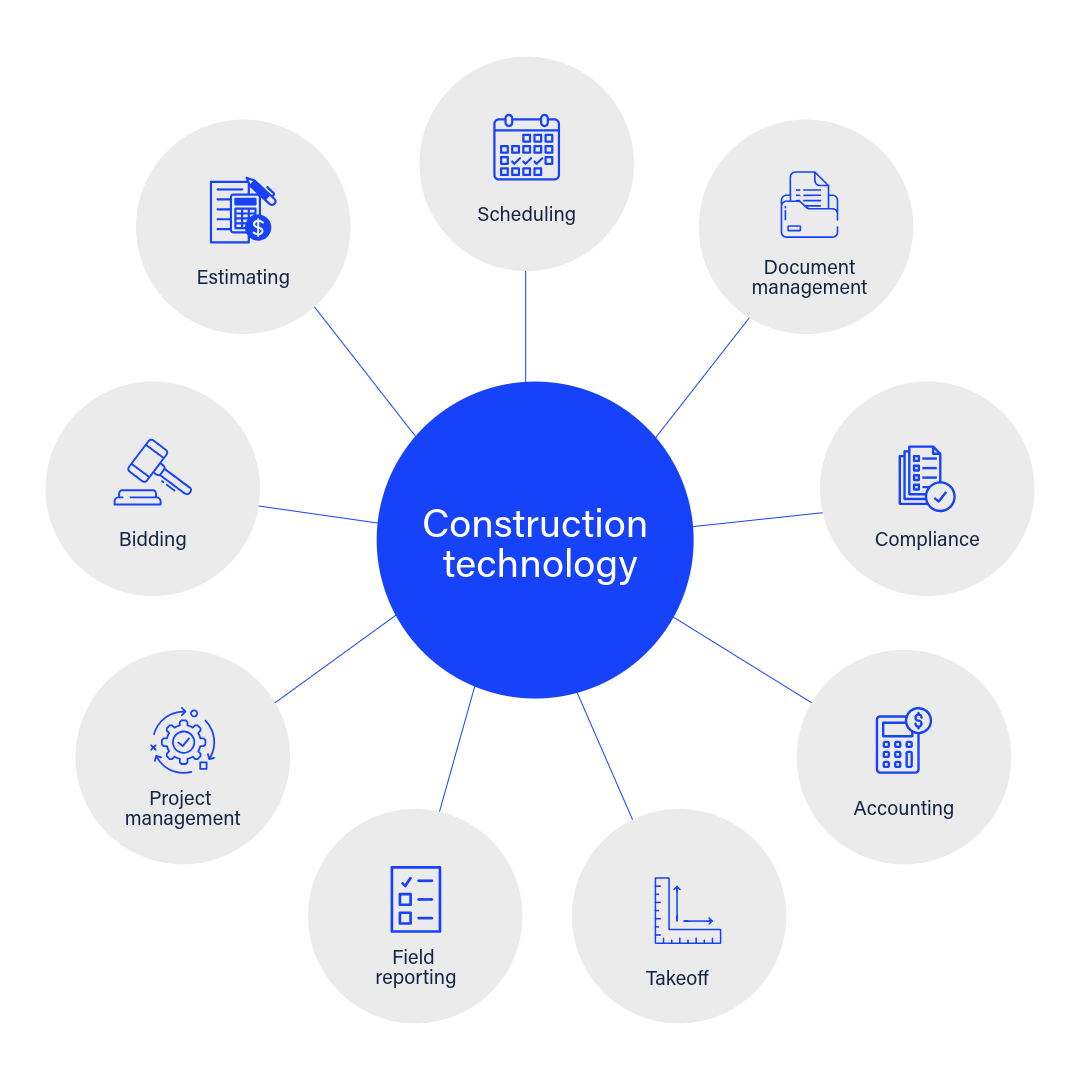
Why construction teams must prioritise a cohesive tech stack
On average, construction firms are using more than six digital technologies across project delivery. Each tool may address a specific pain point, but when systems don’t connect, teams struggle with fragmented workflows and duplicated effort.
A fragmented technology stack means:
- Limited visibility across teams and processes
- Higher administrative workload
- Increased training and support costs
- Confusion about which tools should be used for which tasks
To truly unlock the value of your construction tech investments, companies need a unified tech strategy that aligns tools, workflows and data flows end-to-end.

The hidden costs of a disconnected technical stack
Construction is inherently collaborative; estimating, planning, finance and field operations all depend on shared information. When technology doesn’t integrate:
- Teams create manual workarounds
- Data gets duplicated across platforms
- Critical information is lost between handovers
- Workflows become less efficient and more error-prone
In contrast, a streamlined tech stack ensures that:
- Information flows smoothly between systems
- Project teams operate from a single source of truth
- Redundant tools are identified and rationalised

Building a scalable construction technology strategy
Here’s how to approach your tech stack with a strategic lens:
1. Assess your current state
Start with a full audit of existing systems and tools. Understand which platforms are most used and which are redundant. This helps identify where integrations or replacements are needed.
2. Define integration points
A robust technology strategy outlines how data should move between systems. Identify where automation and integration can eliminate manual data re-entry and reduce errors.
3. Align tools with business outcomes
Technology should support your organisational goals, not add complexity. Choose tools that enhance collaboration, visibility and project delivery efficiency.
4. Plan for change and adoption
A successful tech stack isn’t just about tools, it’s about people. Build a change management plan that includes training, support and ongoing evaluation of tool effectiveness.
Benefits of a clean, future-ready tech stack
When construction companies refocus on strategic technology use, they can:
- Reduce duplicated work and rework
- Improve cross-department collaboration
- Lower training and support overheads
- Increase ROI on software investments
- Empower teams to work more productively and consistently
Getting your tech stack right now will set your business up to thrive in 2026 and beyond.